
Washington Township Directory Collections
No township-wide printed directory run exists for Washington Township. The nearest documented shelf sits at the Columbus Metropolitan Library, whose Main Library holds annual Columbus volumes going back to 1841. Those books serve a Washington Township or Dublin lookup only after the reader confirms the volume actually covers the address in question. CML also runs a digitized collection with material from the 1840s onward, and digitization continues. Cite the publisher and edition from the title page or catalog record, never from assumption.
| Collection | Years | Where Held | Access |
|---|---|---|---|
| Annual Columbus volumes | 1841 to date, annual | Columbus Metropolitan Library Main Library | Self-serve Franklin County directory research; verify a Washington Township address is included. |
| CML digitized collection | Holdings date to the 1840s | Columbus Metropolitan Library digital collections | Browse or search individual item metadata while digitization continues. |
| Street-address section | Beginning 1911 | Within the annual Columbus volumes at Main Library | Use an address to find a listed occupant where the volume covers that place. |
| Early Franklin County telephone directories | Dates not separately verified | CML digitized collection | Related name and address material, distinct from an annual resident volume. |
| Dublin Historical Society archives | Early 1800s to present holdings | Society catalog and off-site archival collection | Online catalog and Dublin Memories; originals require an appointment. |
These collections overlap without forming one continuous Washington Township roll. Geography is the central caution. CML's coverage is strongest inside the Columbus corporate limits, yet the Township includes Dublin and extends beyond Franklin County.
Washington Township Historical Directory Shelf
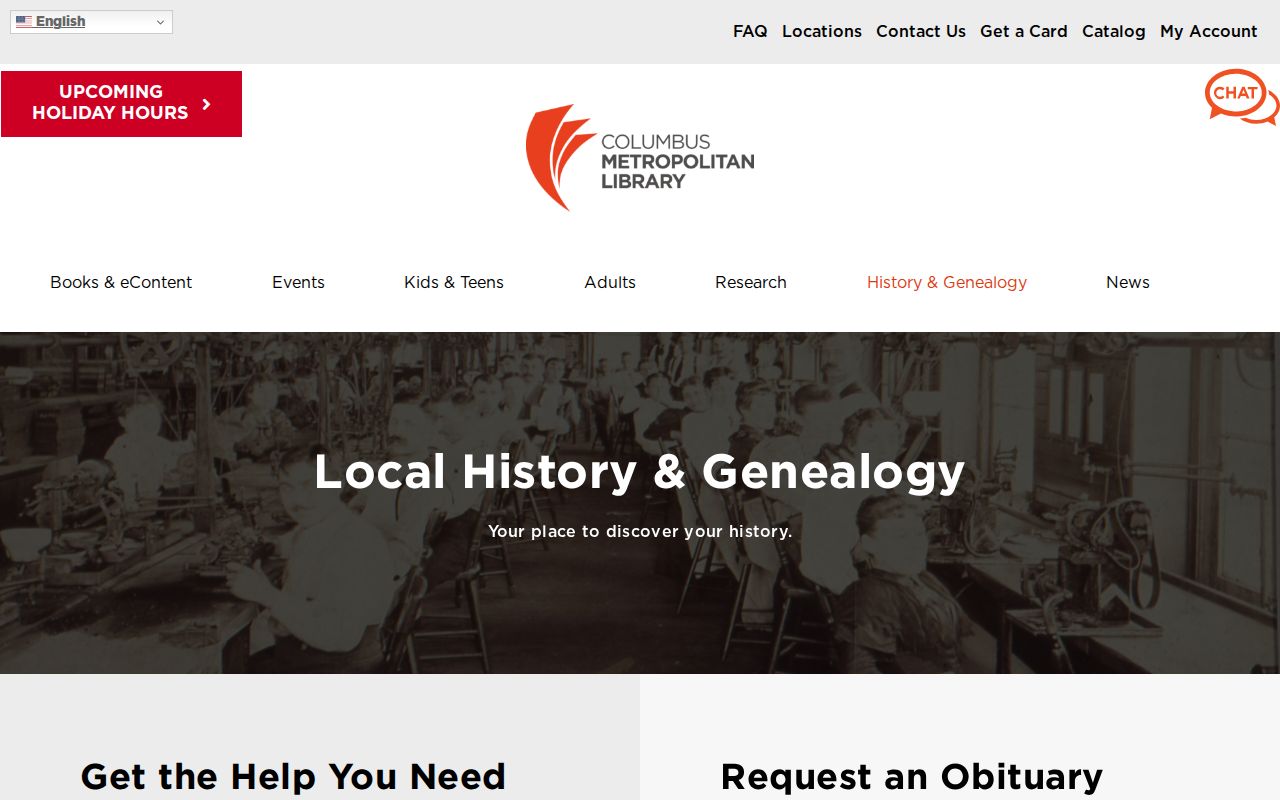
Columbus Metropolitan Library Local History & Genealogy is the practical first stop for Washington Township historical-directory work. Walk-in browsing is available at the Main Library. The department also offers one-hour in-person consultations. Online help is available too. You can also use a house-history guide, obituary requests, maps, yearbooks, and in-library Ancestry Library Edition. Staff help earns its keep in tricky cases. A Dublin address may fall outside a volume's expected city coverage. An old road name may need matching against a current parcel description.
The library's house-history guide stands out. It shows how annual directories pair with property sources. It does not convert a directory into a deed record. For ownership, take the address or legal description to the Franklin County Auditor and Recorder. For a historical occupant, keep the directory year close. Keep the page or image reference beside the name.
The CML Local History and Genealogy desk is a documented fallback. A digitized search may fail to surface the year you need. That is when the desk helps most.
A shelf visit, a consultation, or an online inquiry can resolve a missing scan, and an empty online result never proves that no directory survives. Note: Record the volume title and its geographic wording before applying any directory entry to a Washington Township address.
Washington Township Street Directory Change
A quiet shift arrived in 1911. That year the Columbus directories added a house-by-street-address section. It changed the game. Before 1911, anyone chasing an address started with a name in the alphabetical listings. From there they worked outward. Afterward, the street section ran the other way. It led from a covered address straight to its listed occupant. For anyone digging into Washington Township or Dublin history, that reverse route is genuinely powerful. It just comes with a catch. The lookup only works when the Columbus volume actually reached the township address in a given year.
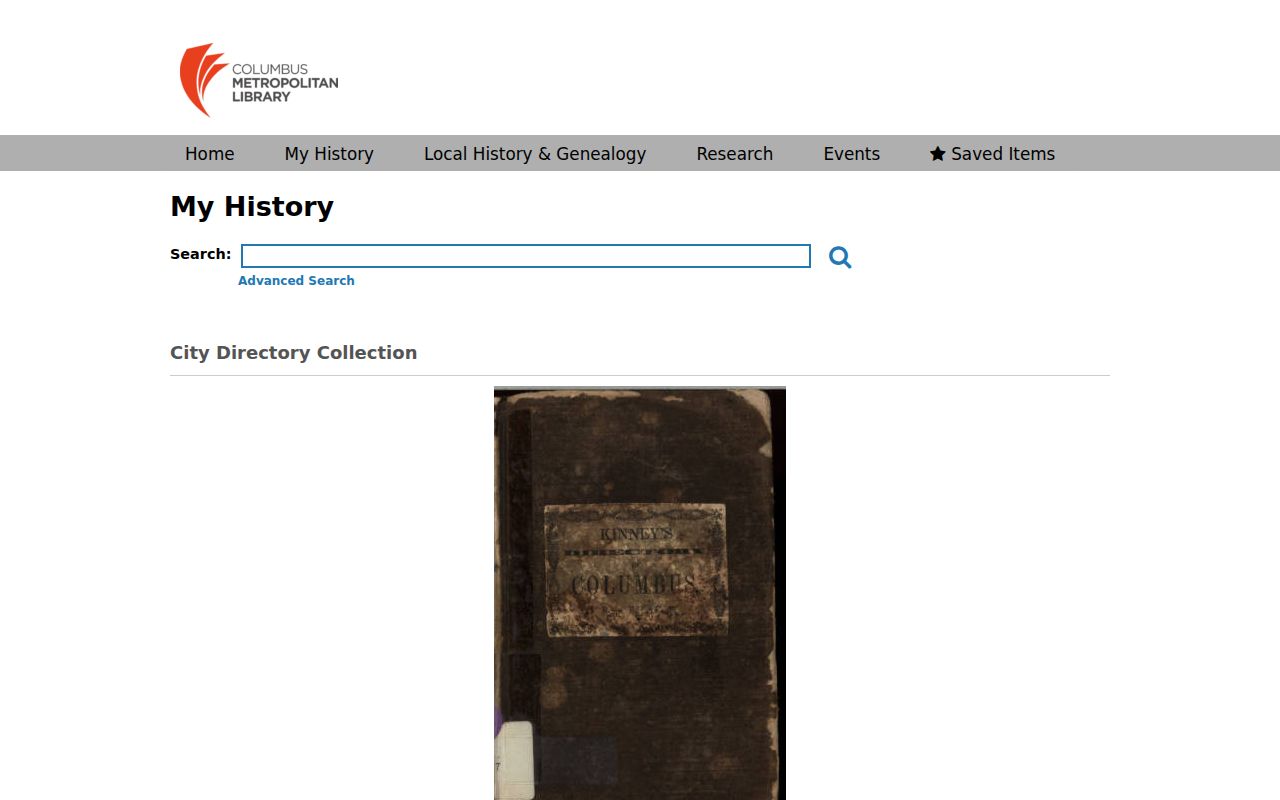
CML's digitized collection is the easiest way in. It holds scanned directory material along with item metadata. It reaches early Franklin County telephone directories too. No publisher-by-publisher inventory exists in the official sources. So the title page is where you settle those questions. Publisher, edition year, and any abbreviation key all appear there.
One caution deserves its own line. The collection is a rich source for historical directory work. It is not proof that every local address made print every year.
Once a street listing yields a name, work through the alphabetical section of the same and neighboring editions to catch an address change or a new occupation.
Reading Washington Township Directory Entries
Read a CML directory entry as a dated occupant clue. Normal annual Columbus entries can carry a resident name, a residential address, and often an occupation. The library confirms this. The alphabetical organization is standard, and the later street section is too. The collection landing page does not display a specific scanned entry. So spouse wording, ownership marks, and abbreviation symbols should not be assumed without opening the relevant page.
| Resident name | The person listed in the alphabetical directory for that edition. |
|---|---|
| Residential address | The location connected to that entry, subject to the volume’s geographic coverage. |
| Occupation | Often supplied by the annual Columbus directory, according to CML. |
| Street listing | From 1911, a house-by-street-address section can point to a listed occupant. |
| Ownership | Not established by the listing. Confirm title through recorded land documents. |
- Criss-cross section
- A street-order section that lets a covered address lead to a listed occupant; CML documents this function from 1911.
- Householder index
- A name-based arrangement used to locate a directory entry before comparing address information.
- Abbreviation key
- The explanatory key printed in the selected volume. Photograph or note it before interpreting unfamiliar marks.
Never treat a directory occupant as the property owner. A person may have moved, been omitted, or appeared under a variant name, while title sits with someone else entirely.
Washington Township Directory Clues
When a historical directory trail runs cold, CML offers narrower resources. These answer a different question. The Columbus News and Obituary Index covers selected news from 1960 through 1997. It also covers obituaries from 1931 through 1997. Additional browsable or searchable obituary sets reach into earlier years. CML also advertises Dispatch Digital from 1871 to the present. An obituary date or article lead can explain a disappearance from the directories. That works far better than guessing from absence alone.
CML accepts up to six free obituary requests per month. The request route asks for the deceased person’s name. It also asks for an obituary or death date. Responses usually arrive within 48 hours, except on Sundays, holidays, and closings. That makes the library a solid follow-up channel once an address or name surfaces in a directory. It is not a basis for inferring a family tie from a single listing.
CML My History adds digitized central Ohio photos, documents, maps, artifacts, and yearbooks. Its December 2025 announcement reported a two-millionth scanned item. That shows the digitized historical channel still growing.
Washington Township Historical Directory Maps
Old addresses can shift form even when the family stays put. CML holds map collections that anchor a Washington Township directory address in its own period. The Caldwell atlas dates to 1872. Baist atlases cover 1899, 1910, and 1920. Modie & Kilmer mapped 1910. Franklin Survey Company material dates to 1937. Columbus Sanborn holdings span 1887, 1891, 1901, 1921, and 1921-51. Every map has an area limit. A Washington Township location must be checked for coverage first. No road or structure conclusion should be drawn before that check.
For a modern-to-historic handoff, keep the current parcel number handy. Keep the legal description beside the directory address too. The Township sits across county lines. Dublin postal labels make a poor substitute for the county record key. A period map supplies context for a lot or road. The parcel and Recorder trail still establishes the legal connection.
Note: A mapped street form can guide a search. It does not prove the same household occupied an address.
Washington Township Directory Timeline
Sells Mills became Dublin in 1815. That naming quirk is exactly why a Washington Township historical-directory search crosses several catalog and index systems. The date anchors here are collection history. They do not prove that every item covers the same local geography.
| Date | Verified directory or records event |
|---|---|
| 1809 | Washington Township organized, including what was then Sells Mills. |
| 1815 | Township history records the renaming of Sells Mills to Dublin. |
| 1841 | CML’s annual Columbus directory volumes begin at Main Library. |
| 1911 | The Columbus directories add a house-by-street-address section. |
| 2025 | CML reported its My History collection had reached two million digitized items. |
An older item may say Sells Mills. Another may say Dublin, Washington Township, or Franklin County. Compare the spelling and jurisdiction printed in each source instead of forcing a modern mailing label onto it.
Tracing Washington Township Directory Years
Treat each annual directory as one dated observation in a household trace. Start with a name or covered address. Preserve the exact wording. Then test the next source against it. Federal population schedules open after 72 years, and 1950 is the newest released census. Census labels may use a county, township, or ward rather than a modern Dublin postal name, so leave room for different location language.
- Find the first Washington Township or Dublin name or address appearance in a volume whose geographic coverage fits the search.
- Record the edition year, page or image reference, printed name, address, and any occupation before moving to another source.
- Check nearby annual volumes for a move, spelling change, or new occupation, and use the 1911-and-later street section where available.
- Pair the date with the appropriate released census, preserving the census place label rather than replacing it with a current postal label.
- Use the obituary index, Dispatch search, or an archival catalog as a follow-up lead, then confirm property questions through the Auditor and Recorder.
A missing listing can reflect a move, a geographic omission, a name variation, or a gap in the source itself. It is not enough to establish a death, a sale, or a complete roster of everyone at the address. A directory name that needs present-day confirmation can be checked through the Washington Township resident lookup.
Note: Census place labels and directory labels should stay verbatim in any notes until the parcel trail confirms the connection.
Washington Township Archive Research
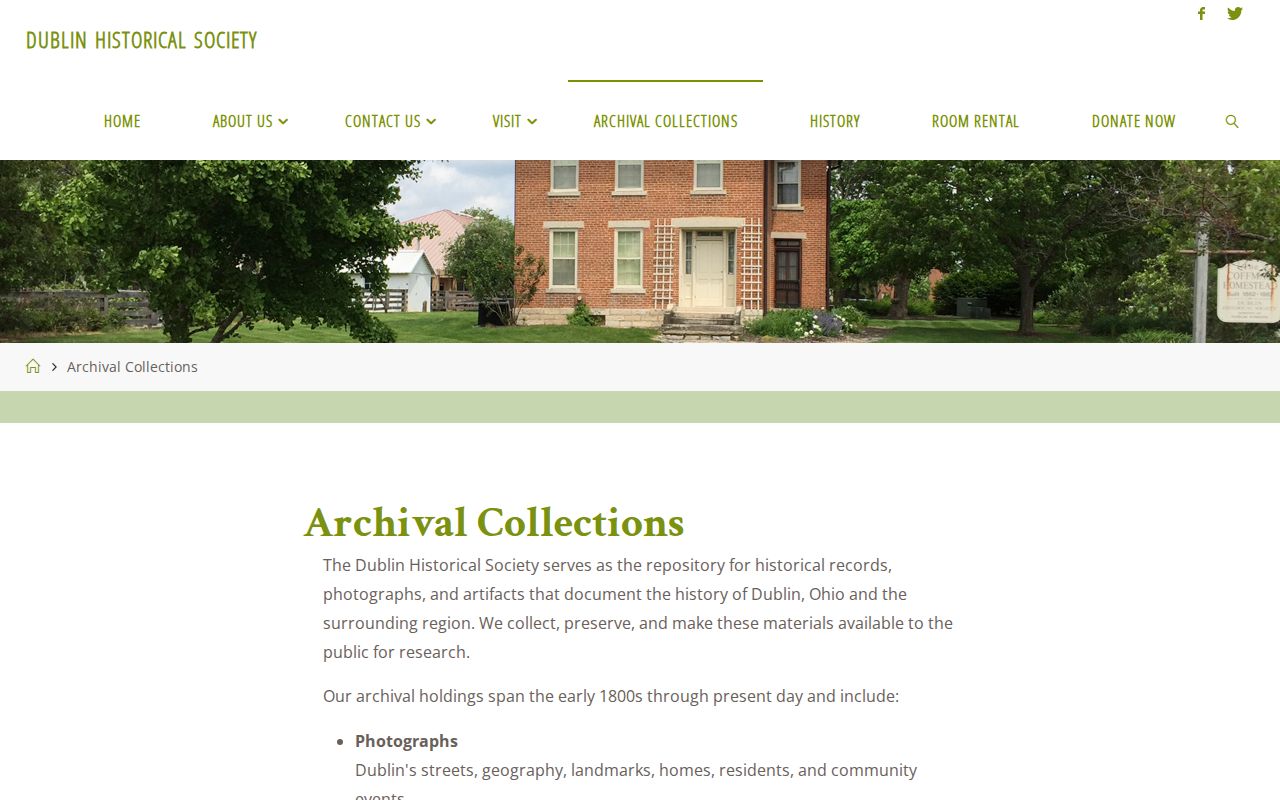
The Dublin Historical Society archives are the most local complement to the CML directory shelf. Holdings include family papers, photographs, maps, and property records. Organizational and school material, newspapers, ephemera, and oral histories round out the collection. Catalog descriptions and Dublin Memories serve as the online discovery channels. A catalog hit identifies a collection. It does not prove facts inside an unreviewed item.
Originals sit in a secured off-site facility. Supervised visits run by appointment on Thursdays from 9 a.m. to noon at the museum, with at least one week's notice. The older inventory names groups such as the Gowing Family Papers, Ladies' Social Circle, Dublin Militia, Monadnock Grange, Stonewall Farm Papers, and Dublin Women's Community Club. Confirm a collection's scope with the catalog first. Only then tie it to a person or address.
For material beyond county databases and the CML shelf, the Dublin Historical Society archives are the documented local route. They fill gaps the big systems cannot.
Wait to use the appointment channel until directory, map, and obituary leads have narrowed the request. Bring a name, place, date, or organization.